NEWSTIVI
Marco Polo
Venetian merchant and traveller
Marco Polo (c. 1254–1324) was a Venetian merchant and traveller whose account of journeys through Asia became known as The Travels of Marco Polo. His descriptions of Yuan China and the Mongol world influenced European mapmaking and later exploration.
EARLY LIFE AND MERCHANT FAMILY
Marco Polo was a Venetian merchant and traveller, born around 1254. He belonged to a family involved in long-distance trade. His father, Niccolò, and uncle, Maffeo, had travelled east and visited the court of the Mongol ruler Kublai Khan before Marco joined them.
Relatively little is known about his childhood. His later reputation rests chiefly on the account of his Asian travels, which became one of medieval Europe’s most influential descriptions of distant lands.
THE JOURNEY TO ASIA
In 1271, while still a teenager, Marco left with his father and uncle on another journey to Asia. Their travels took them across the eastern Mediterranean and through Persia and Central Asia towards the Mongol court.
The family reached Kublai Khan’s realm in the 1270s. Marco’s account describes a world connected by trade, political authority and long-distance routes. It presents the journey as more than a sequence of geographical discoveries, with attention to commerce, customs and the workings of government.
CHINA UNDER MONGOL RULE
Polo’s narrative contains descriptions of cities, palaces, markets and court ceremonies in Yuan China. He wrote about paper money, the postal system and the scale of commercial activity, providing European readers with accounts of institutions unfamiliar to many of them.
He described service to Kublai Khan and travel undertaken on the ruler’s behalf. The extent of his official responsibilities remains debated, however. Some claims about his importance at court cannot be independently confirmed and should be distinguished from the broader evidence supporting his presence in China.
RETURN TO VENICE AND THE BOOK
The Polos returned to Venice around 1295 after a journey home that included travel by sea through Asian waters. Marco subsequently became a prisoner during conflict between Venice and Genoa.
While imprisoned, he worked with Rustichello of Pisa to produce the account commonly known as The Travels of Marco Polo or Il Milione. Rustichello’s role in shaping the narrative is an important part of the book’s history: it was a collaborative literary work, rather than an untouched daily travel diary.
The text circulated through manuscripts, translations and later editions. Differences between versions complicate the task of reconstructing precisely what Marco originally related.
READING THE TRAVELS CRITICALLY
Scholars have long examined the book’s accuracy. Its detailed descriptions of Mongol institutions and cities can be compared with Chinese and Persian evidence. At the same time, exaggerations and unsupported claims mean that individual episodes require careful assessment.
Polo was not the first European to reach China. His distinctive achievement was the reach and influence of the narrative associated with his travels.
LATER LIFE AND LEGACY
After his release, Polo returned to life in Venice, married and had three daughters. He died in January 1324.
His account influenced European geographical imagination, mapmaking and later travellers, including Christopher Columbus. Its enduring importance lies in the information it transmitted, the curiosity it encouraged and the questions it continues to raise about travel, memory and cross-cultural understanding.
Sources
University of Michigan Library — Marco Polo (c.1254–1324)
https://apps.lib.umich.edu/online-exhibits/exhibits/show/travel-through-maps-and-narrat/explorers/marco-polo--c-1254-1324-)
Columbia University, Asia for Educators — Marco Polo
https://afe.easia.columbia.edu/mongols/figures/figu_polo.htm
Columbia University, Morris Rossabi — Did Marco Polo Really Go To China?
https://afe.easia.columbia.edu/mongols/pop/polo/mp_essay.htm
The Mariners’ Museum and Park — Marco Polo, Ages of Exploration
https://exploration.marinersmuseum.org/subject/marco-polo/
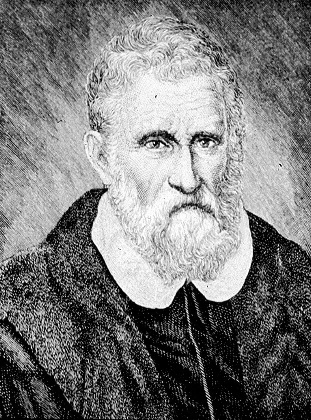
Portrait: anonymous later depiction, commonly dated to around 1600, via Wikimedia Commons; public domain. This is not an authenticated portrait made during Marco Polo’s lifetime.
https://commons.wikimedia.org/wiki/File:Marco_Polo_portrait.jpg